Source cordless ceramic hair styling tools for Salon, SPA, and Household
Explore 30 listings of cordless ceramic hair styling tools with features like PTC heaters and LCD displays. Buyers can compare models such as MD-258B and HB08 for applications in salons, spas, and commercial settings with varying power and voltage options.
Key considerations
Products List


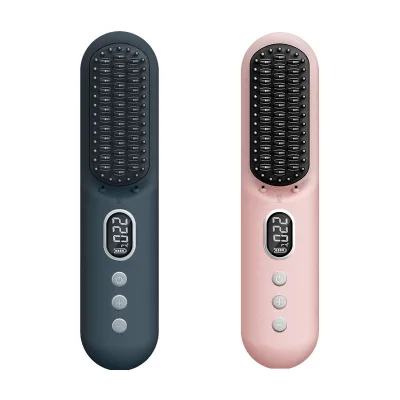


Comprehensive Sourcing Guide
Sourcing Guide for Cordless Ceramic Hair Styling Tools
Understanding the Technical Landscape of Cordless Ceramic Styling
When sourcing cordless ceramic hair styling tools, buyers must first navigate a fragmented technical landscape where "cordless" and "ceramic" are often combined with varying degrees of integration. The core keyword implies a device that operates without a direct power cord, typically relying on an internal battery, while utilizing ceramic materials for the heating element or barrel to ensure even heat distribution and reduce hair damage. Based on observed product attributes in the current market, the term "ceramic" appears in specific contexts, such as "Ceramic" material listings and "PTC Ceramics" heater types. This distinction is critical; a tool described as having a ceramic barrel may use a different heating mechanism than one explicitly listing "PTC Ceramics" or "MCH" (Metal Ceramic Heater) technology.
The power specifications for these devices vary significantly. Observed data indicates a range of power ratings, with specific models citing 45W, 40W, and a broader range of 48-52W. For cordless units, the rated voltage is a pivotal metric, with some observed units operating at 3.7V, which is standard for lithium-ion battery systems. However, other listed products show a voltage range of 110-240V, which typically denotes AC-powered devices rather than true cordless battery-operated units. Buyers must rigorously verify whether a product is genuinely cordless or if the listing conflates portable AC devices with battery-operated ones. The presence of "Negative Ion" features, with some units claiming 30 million ions, is another technical differentiator often paired with ceramic technology to reduce static and frizz.
The heating capabilities are equally diverse. Some products list a temperature range of 140-200℃ (280-390°F), while others specify a fixed "Temperature Regulation Level" of 4. The heater type is a primary indicator of performance; observed categories include PTC, MCH, and PTC Ceramics. PTC (Positive Temperature Coefficient) heaters are known for self-regulating properties, which can enhance safety, while MCH heaters often provide faster heating times. The "Fast Heating" feature is explicitly mentioned in product attributes, suggesting that speed is a key performance expectation for modern styling tools.
Compliance, Certification, and Safety Standards
In the B2B procurement of electrical beauty devices, compliance is not merely a formality but a prerequisite for market access and liability protection. While specific certification statuses for every listed product cannot be definitively confirmed from the provided data, the background context highlights CE, RoHS, and REACH as relevant standards often associated with this category. Buyers should treat these as verification targets rather than guaranteed attributes of every listing.
The "prod_standard" field in product data often contains physical dimensions (e.g., 33.596cm, 2495cm) or functional ranges (e.g., 16MM-20MM) rather than safety certifications. This highlights a common confusion in product listings where physical specifications are conflated with regulatory standards. When evaluating a supplier for cordless ceramic tools, procurement teams must explicitly request documentation for electrical safety standards applicable to the target market, such as UL for North America or GS for Europe. The "Warranty" attribute of 1 Year and "After-Sales Service Provided: Free Spare Parts" suggests that some suppliers are prepared to handle post-sale issues, but this does not substitute for pre-shipment compliance testing.
Furthermore, the "prod_origin" is consistently listed as China, specifically noting Zhejiang as a production hub for some models. While this indicates a manufacturing cluster, it necessitates a rigorous audit of the supplier's quality management systems. The "Customized" standard attribute implies that many suppliers offer OEM/ODM services, which can complicate compliance if the customization involves altering the electrical circuit or battery pack. Any modification to the core electrical design requires re-certification. Buyers must ensure that the supplier can provide valid test reports from accredited laboratories for the specific configuration being ordered, rather than relying on generic certification documents for a different model.
Cost Drivers and Pricing Dynamics
The pricing for cordless ceramic hair styling tools is influenced by a complex interplay of material costs, battery technology, and customization levels. The observed price range in the market spans from $1 to $68 USD, a wide variance that reflects differences in quality, feature sets, and order volumes. The lower end of this spectrum likely corresponds to basic models with simple ceramic coatings and lower-capacity batteries, while the higher end may include advanced features like LCD displays, multiple temperature settings, and premium build materials.
Material composition is a primary cost driver. Products listed with "Aluminum" or "Plastic" as materials may differ in cost and durability compared to those emphasizing "Ceramic" construction. The inclusion of "PTC Ceramics" or "MCH" heaters also adds to the unit cost due to the complexity of the heating element. Additionally, the battery is a significant cost factor in cordless devices. A device with a 3.7V rating and a claimed "Negative Ion" output of 30 million ions likely requires a more sophisticated internal circuit and higher-grade battery cells, pushing the price toward the upper range of the observed spectrum.
Order Volume (MOQ) is another critical variable. The observed MOQ range is extensive, spanning from 1 to 10,000 units. High-volume orders often unlock lower per-unit costs, but the supplier may require a minimum commitment of 1,000 units or more to justify the setup costs for custom packaging or branding. The "prod_packing" attribute varies from "Carton" to "Color Box" to "Customized," and the choice of packaging significantly impacts the final landed cost. Custom packaging, which may include UV printing for logos, adds a layer of expense that must be factored into the total cost of ownership. Buyers should negotiate based on the total value, including packaging and shipping, rather than focusing solely on the unit price.
Typical Applications and Market Segmentation
The application scope for cordless ceramic hair styling tools is broad, extending from professional environments to consumer households. Observed attributes list applications in "Salon," "SPA," "RV," "Hotel," "Garage," "Commercial," and "Household" settings. This diversity suggests that the product category is not monolithic; rather, it encompasses specialized tools for different use cases.
Professional applications in salons and spas often demand higher performance, such as consistent temperature control and durability. Models with "Automatic" or "Semi-Automatic" types and "LCD" displays are likely targeted at this segment, offering precision and ease of use for stylists. The "Suitable Hair Type: All Hair Types" attribute indicates a general-purpose design, but professional users may prefer tools with specific temperature ranges, such as the observed 140-200℃ range, to handle different hair textures safely.
In contrast, household and travel applications prioritize portability and ease of operation. The "Cordless" nature of the product is a key selling point for travelers, RV users, and those with limited power outlets. The "Manual" type devices may be more suitable for general household use where advanced automation is unnecessary. The "After-Sales Service System: Overseas Call Center" suggests that some suppliers are catering to a global consumer base, anticipating the need for support in various time zones. Understanding the specific application of the target market is essential for selecting the right product model, as a tool designed for a commercial salon may be over-engineered and too expensive for a retail consumer, while a basic household tool may lack the durability required for a professional salon.
Supplier Evaluation and Quality Control Protocols
Evaluating suppliers for cordless ceramic hair styling tools requires a multi-faceted approach that goes beyond surface-level product descriptions. The "prod_model" field shows a variety of identifiers, such as "MD-258B," "1920s," "HB08," "JC-888," and "01," which may indicate different product lines or generations. Buyers should verify the consistency of these models across different batches to ensure quality stability. The "Logo/Graphic Customization Process: UV Printing" indicates that suppliers have specific capabilities for branding, but the quality of this process must be verified to ensure the logo does not fade or peel over time.
Quality control (QC) is paramount, especially for electrical devices. The "Warranty: 1 Year" and "After-Sales Service Provided: Free Spare Parts" are positive indicators of a supplier's confidence in their product. However, buyers should implement their own QC protocols, including pre-shipment inspections. Key areas to inspect include the integrity of the battery, the consistency of the ceramic coating, and the functionality of the temperature regulation. The "Temperature Settings: 4 Levels" and "Temperature Regulation Level: 4" suggest that multi-level control is a common feature, and these settings must be tested for accuracy and stability.
The "Qty/CTN: 120PCS" and "CTN Size: 55.548.427" provide insight into the packaging efficiency and logistics. Buyers should assess whether the packaging protects the devices adequately during transit, especially given the delicate nature of ceramic components and batteries. The "prod_packing: Customized" option allows for tailored packaging, but it introduces a variable that must be managed to prevent damage. Suppliers with a track record of handling "Overseas Call Center" support may also have more robust logistics and quality assurance systems in place.
Long-Term Procurement and Strategic Considerations
Sourcing cordless ceramic hair styling tools is not a one-time transaction but a strategic partnership that requires long-term planning. The "Customization: Available" attribute suggests that suppliers are flexible, but buyers must consider the implications of customization on supply chain stability. Custom orders often have longer lead times and higher MOQs, which can impact inventory management. The "prod_origin: China" and "Zhejiang, China" locations indicate a concentrated supply base, which can be advantageous for logistics but may pose risks if geopolitical or trade issues arise.
Buyers should also consider the lifecycle of the product. The "Negative Ion" feature and "Ionic" technology are marketing points that may evolve with consumer trends. A product that is popular today may become obsolete if new technologies emerge. The "Warranty" and "After-Sales Service" terms are critical for managing returns and maintaining brand reputation. A supplier that offers "Free Spare Parts" demonstrates a commitment to product longevity, which is beneficial for buyers who want to minimize the risk of defective units affecting their brand image.
Finally, the "App-Controlled: No" attribute indicates that current models do not rely on smartphone connectivity, which simplifies the product design and reduces the risk of software-related failures. However, buyers should monitor the market for emerging trends in smart connectivity, as this could become a differentiator in the future. Strategic procurement involves balancing current market demands with future technological shifts, ensuring that the sourced products remain competitive and relevant over the long term. By focusing on verified technical specifications, robust compliance, and reliable supplier relationships, buyers can navigate the complexities of the cordless ceramic hair styling tools market effectively.
FAQs
What heater types are available for cordless ceramic styling tools?
Available heater types include PTC, MCH, and PTC Ceramics. These technologies ensure fast heating and self-regulating safety features for consistent performance across different hair types.
Can these tools be customized with specific logos or graphics?
Yes, customization is available for logos and graphics using UV printing processes. Buyers can request specific branding on the product or packaging to match their business identity.
What is the typical voltage range for these hair styling devices?
The observed voltage range spans from 3.7V for cordless battery units to 110-240V for AC-powered models. Buyers must verify the power source requirement before selecting a specific model.
Which temperature settings are commonly offered on these devices?
Many models offer four temperature regulation levels with ranges between 140-200℃. This allows users to adjust heat for different hair textures while ensuring safety and effectiveness.
How are these products typically packaged for shipment?
Packaging options include standard cartons, color boxes, and customized solutions. The choice of packaging affects logistics and branding, with some units designed to hold multiple pieces per carton.
What warranty and after-sales support do suppliers provide?
Suppliers typically offer a one-year warranty and provide free spare parts for repairs. Some vendors also maintain overseas call centers to assist international buyers with technical support.